What Does uPVC Stand For? A Complete Guide for Homeowners
If you’ve been researching new windows or doors for your home, you’ve probably come across the term uPVC.
It appears frequently when people start looking into double glazing, energy-efficient homes, and modern window systems. But many homeowners still ask the same question before deciding whether it’s right for their home:
What does uPVC actually stand for?
Understanding the material used in your windows is important because it directly affects comfort, durability, energy efficiency, noise reduction and long-term maintenance.
In this guide we’ll explain:
-
What uPVC stands for
-
What uPVC is made from
-
Why it’s used for windows and doors
-
How it compares to aluminium
-
Why more Australian homeowners are upgrading to uPVC
What Does uPVC Stand For?
uPVC stands for Unplasticised Polyvinyl Chloride.
It is a rigid form of PVC plastic that does not contain added plasticisers. Because of its strength, durability, and resistance to weathering, uPVC is commonly used for window frames, doors, pipes, and other building materials. In modern homes, uPVC windows are popular for their energy efficiency, low maintenance, and long lifespan.
Because uPVC does not contain these additives, it becomes:
-
Strong and rigid
-
Highly durable
-
Resistant to weather and UV exposure
-
Long lasting and structurally stable
These properties make uPVC an ideal material for window frames, door frames, and other structural building products.
Today, uPVC is one of the most widely used window materials in Europe, the United Kingdom, and increasingly Australia.
What Is uPVC Made From?
uPVC is produced from polyvinyl chloride resin, which is then combined with stabilisers and additives that improve performance.
These additives help provide:
-
UV resistance
-
Structural strength
-
Colour stability
-
Weather durability
Unlike some other plastics, uPVC remains rigid and stable over time, which is why it works so well as a structural framing material.
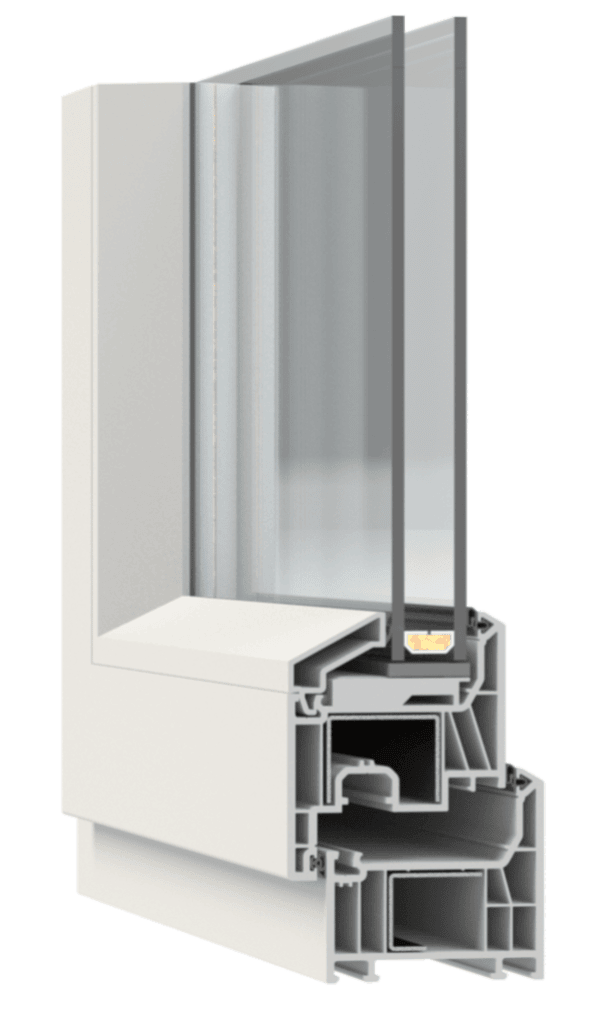
When engineered into modern window systems, uPVC frames are typically designed with multiple internal chambers that improve insulation and strength.
 Why Is uPVC Used for Windows and Doors?
 Why Is uPVC Used for Windows and Doors?
uPVC has become a popular choice for windows and doors because it offers several performance advantages over traditional materials.
These benefits are particularly important in modern homes that aim to reduce energy consumption and improve indoor comfort.
1. Excellent Thermal Insulation
One of the main reasons homeowners choose uPVC windows is energy efficiency.
uPVC frames naturally conduct far less heat than aluminium. Combined with double glazing or triple glazing, this significantly reduces heat transfer through the window.
This can result in:
-
Warmer homes in winter
-
Cooler homes in summer
-
Reduced heating and cooling costs
-
Improved energy ratings for the home
For many households upgrading from single-glazed aluminium windows, the improvement in comfort can be dramatic.
2. Durability and Weather Resistance
uPVC is designed to handle long-term exposure to harsh weather conditions.
High-quality uPVC window systems are:
-
Resistant to UV radiation
-
Impervious to moisture
-
Not susceptible to corrosion
-
Structurally stable in temperature fluctuations
This makes uPVC particularly suitable for Australian climates, where materials must handle strong sun, temperature swings, and heavy rain.
Unlike timber, uPVC will not rot, swell, or warp over time.
3. Low Maintenance
One of the biggest advantages of uPVC windows is the minimal maintenance required.
Timber frames often require repainting or resealing over time, while aluminium frames, even double-glazed aluminium can suffer from condensation and thermal transfer.
uPVC windows typically require only:
-
Occasional cleaning with mild soapy water
-
Basic hardware maintenance
There is no need for painting, sanding, or sealing.
For homeowners looking for a long-term, low-maintenance solution, this is a major benefit.
4. Long Lifespan
High-quality uPVC windows are built to last.
Modern systems are designed with UV stabilisers and structural reinforcements that allow them to perform reliably for decades.
A properly installed uPVC window system can last 30–40 years or more.
This longevity makes them an attractive investment for homeowners who want to improve their home’s performance without frequent replacement.
5. Improved Sound Reduction
Another benefit that homeowners often notice immediately after installing uPVC windows is reduced outside noise.
When combined with double glazing, uPVC windows can significantly reduce sound transmission.
This can be particularly beneficial for homes located near:
-
Busy roads or tramlines
-
Urban areas where businesses operate into the night
-
Schools or public spaces
-
Airports or transport corridors
Better acoustic insulation can dramatically improve the comfort and livability of a home.
uPVC vs Aluminium Windows
In Australia, aluminium windows have traditionally been the most common option in residential homes.
However, when comparing performance, uPVC offers several advantages.
| Feature | uPVC Windows | Aluminium Windows |
|---|---|---|
| Thermal insulation | Excellent | Poor without thermal break |
| Energy efficiency | High | Moderate |
| Condensation resistance | Good | Lower |
| Maintenance | Very low | Low |
| Durability | Excellent | Excellent |
| Noise reduction | Very good | Moderate |
Many modern aluminium systems use thermal breaks to improve insulation, but uPVC frames still typically outperform standard aluminium systems in thermal performance. With airtight seals and welded joins keeping air leakage to a minimum.
Why uPVC Windows Are Becoming More Popular in Australia
Australia has traditionally lagged behind Europe when it comes to high-performance windows.
However, this is changing rapidly as homeowners become more aware of:
-
Rising energy costs
-
Home comfort
-
Sustainability and energy efficiency
-
Building performance standards
In regions like Victoria and the ACT, where winter temperatures can drop significantly, double glazed uPVC windows are becoming increasingly common in both renovations and new builds.
Smart homeowners looking to upgrade older homes often invest in replacing single glazed aluminium windows with uPVC double glazing to improve comfort and energy performance.
The Importance of Professional Window Installation
Even the best window system will not perform properly if it is installed incorrectly.
High-performance windows should be installed with careful attention to:
-
Airtightness
-
Flashing and waterproofing
-
Structural fixing
-
Proper sealing to the building envelope
A professional installation ensures the windows deliver their full thermal and acoustic performance.
Poor installation can lead to drafts, condensation issues, and reduced energy efficiency.
Are uPVC Windows Environmentally Friendly?
Modern uPVC window systems are designed with sustainability in mind.
Benefits include:
-
Long lifespan (reducing replacement frequency)
-
Improved energy efficiency (lower heating and cooling demand)
-
Recyclable material components
Because windows are a major contributor to heat loss in homes, improving their performance can significantly reduce a household’s overall energy consumption.
Final Thoughts
So, what does uPVC stand for?
Unplasticised Polyvinyl Chloride — a strong, rigid material widely used for modern window and door frames.
Its combination of durability, energy efficiency, low maintenance, and long lifespan has made it one of the most popular window materials around the world.
As more Australian homeowners focus on comfort, sustainability, and energy efficiency, uPVC windows are becoming an increasingly attractive upgrade for both new builds and renovations.
Understanding the materials used in your windows is an important step in choosing the right solution for your home.
FAQ’s
What does uPVC stand for?
uPVC stands for Unplasticised Polyvinyl Chloride, a rigid form of PVC plastic commonly used for window frames, doors, and building materials.
Are uPVC windows energy efficient?
Yes. uPVC windows provide excellent insulation, especially when combined with double or triple glazing. They help reduce heat loss in winter and heat gain in summer.
How long do uPVC windows last?
High-quality uPVC windows can last 30–40 years or more when properly installed and maintained.
Are uPVC windows better than aluminium?
uPVC windows generally provide better thermal insulation and energy efficiency than standard aluminium windows, though both materials can be durable and low maintenance.
Do uPVC windows require maintenance?
uPVC windows require very little maintenance. Most only need occasional cleaning with mild soapy water and routine hardware checks.